What lives below
Important ideas are brewing below what gets attention. This is a place to gather them so that they can gain force.
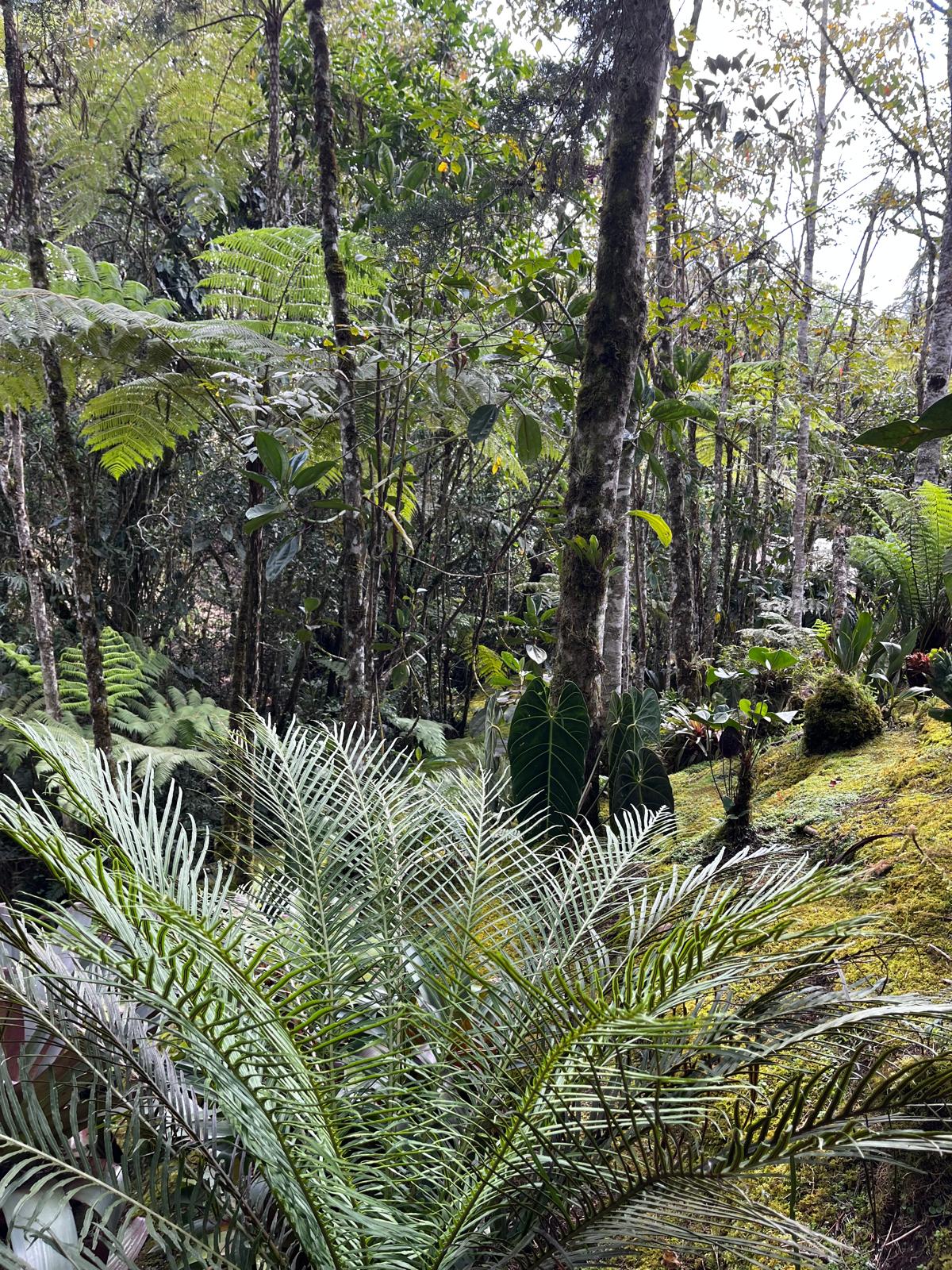
In a forest, the understory is the layer beneath the canopy. It is shaded and easy to walk past, yet it holds the conditions for a diverse range of species to grow, offering protection and regenerative potential. It provides the nutrient-rich environment needed for animals and plants to thrive. Some of the tallest trees in the forest can spend decades here first, in the quiet, rich soil underneath.
Ideas grow the same way. They need space and time to develop. The thinking that takes shape over a decade rarely arrives directly in the headlines. It gathers first in the margins, outside the largest institutions and the usual consensus. UnderStory is the layer beneath the news, a place to collect deep thinking, give it shape, and connect the dots.
What it is
A living archive of constructive ideas, organised around three topics. Each one, a crisis that is also an opening.
From polycrisis to possibility.
Our bond with the earth. Our bond with each other. Our bond with ourselves. Everyone answers from the same small set of questions, so that people with distinct ways of seeing the world can be read side by side.
Who’s in the room
The heart of UnderStory is who gets to speak. A scientist and a novelist. A musician and an investor. A film director and a sociologist. A twenty-five-year-old and a seventy-five-year-old. Voices from Latin America, Africa, Asia, the Middle East, Europe, North America and Oceania.
What someone has lived counts as much as what they have studied. A carpenter and a professor can sit on the same page. Difference here is not a problem to even out. It is the whole point. A poet and a scientist answering the same question may reveal more than ten specialists trained in the same way.
How it’s curated
We select voices that bring depth, clarity, and a distinct perspective, shaped by different cultures, disciplines, and ways of thinking. If writing isn’t your thing, we can do it as an interview and write it up for you. After that, we stay out of the way. Entries run with a two-line bio and no editing of the argument itself.
A door for getting in touch remains open. We’re always looking for new voices as the archive grows.
Five values hold it together
Where it could go
The archive is only the start. The longer view is a living record, and a community around it.
UnderStory is put together by Valentina Ramírez and Sophie Legros.
Valentina has spent more than fifteen years in finance, several of them building bridges between capital markets and climate. She finds joy in singing and practicing capoeira, the Afro-Brazilian practice that is part game, part dance, part fight.
Sophie Legros studies how social norms change, and why some of them hold on. She holds a PhD from the London School of Economics, where her fieldwork followed the everyday sharing of work and care in Medellín. She works where research methods, gender, and the wellbeing economy meet. She finds peace practicing tai chi, a Chinese art of slow, flowing movement grounded in the Taoist idea of harmony with the natural way of things.
We started UnderStory as a way of opening our ongoing conversations to the world, and of gathering wise, generous, and constructive voices in a fractured time.